DESIGNING WHAT WE’RE ALREADY INSIDE OF
There was a time, not that long ago, when not everything was tracked.
You could move through the world without leaving a record. Plans were confirmed with a phone call. Trust required effort, and verification took time. Today, that friction is gone. Location is shared automatically, health is logged continuously, and cameras are embedded into a variety of objects, even fashion. The systems that surround us are built on observation. And most of them are designed to feel like care. Not all of them are.
Designers are not outside these systems. We are shaping how they work, how they are understood, and how they are accepted. That’s where the problem, and the opportunity, begins.
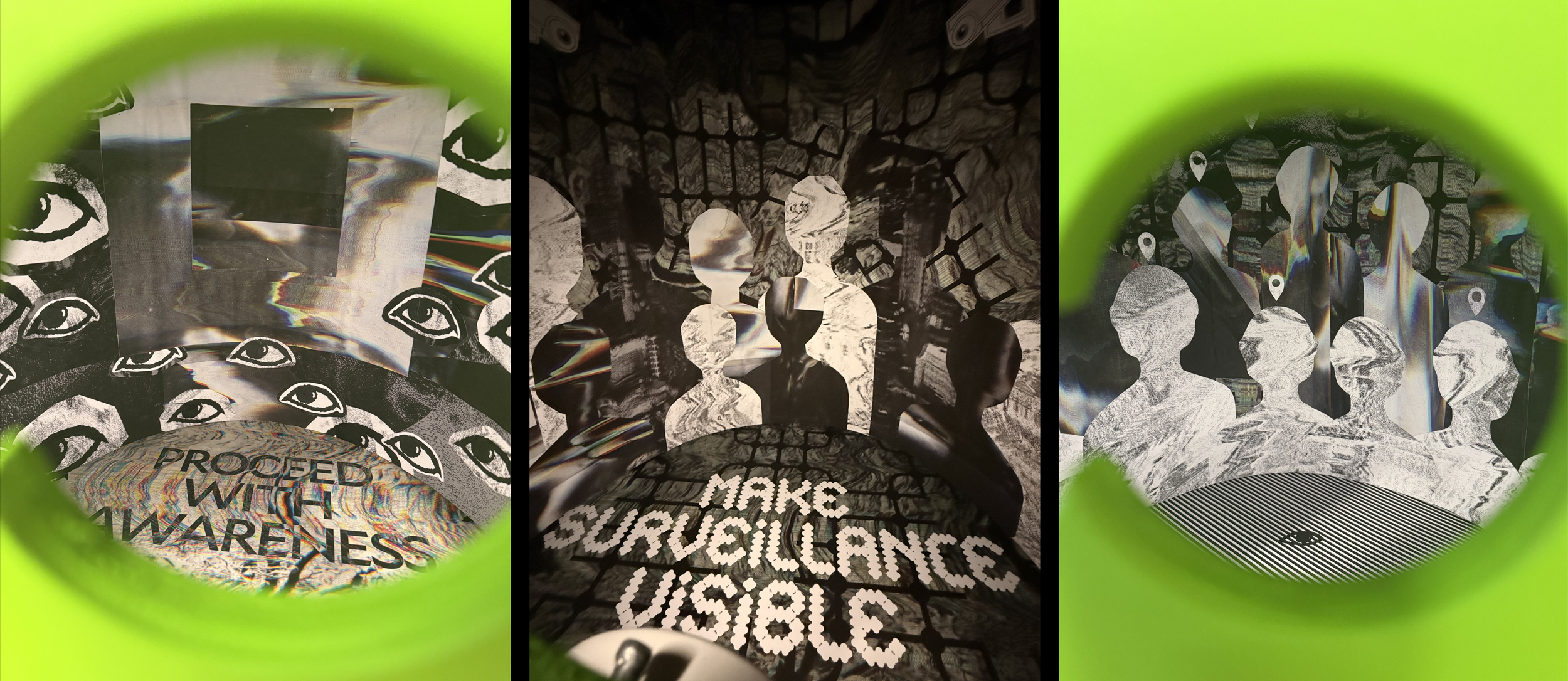
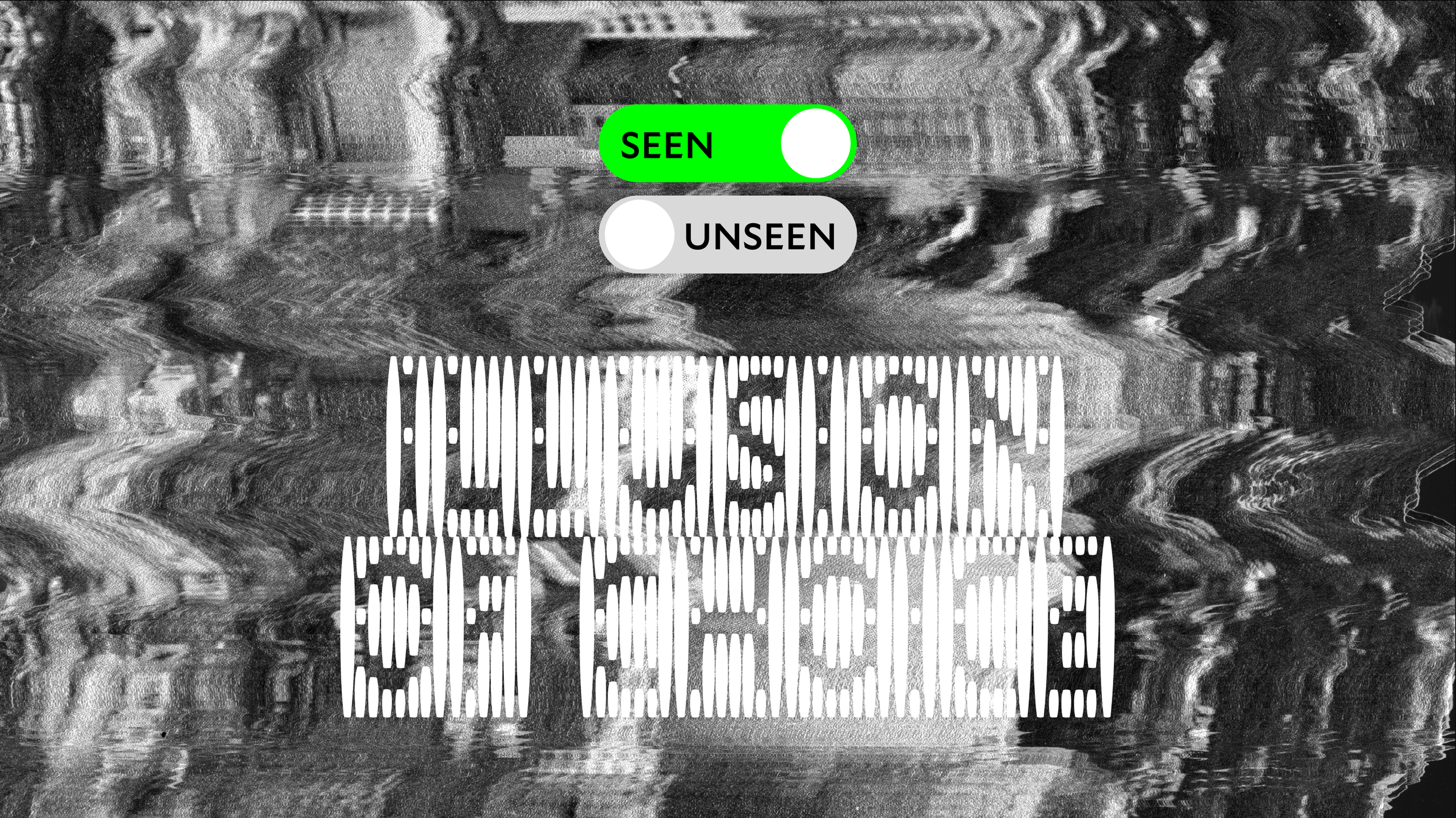
At Thought Matter, we’ve been developing a research project called Seen / Unseen, exploring how communication design shapes systems of surveillance, safety, and public trust. The work began as an internal series of presentations prompted by a brief written by Associate Strategy Director Dylan Stiga, inviting staff to research existing surveillance systems and imagine creative interventions that could increase their public benefit. What started as a set of exercises quickly became something else: a broader inquiry into what we are already participating in, what we are normalizing, and what we might be responsible for.
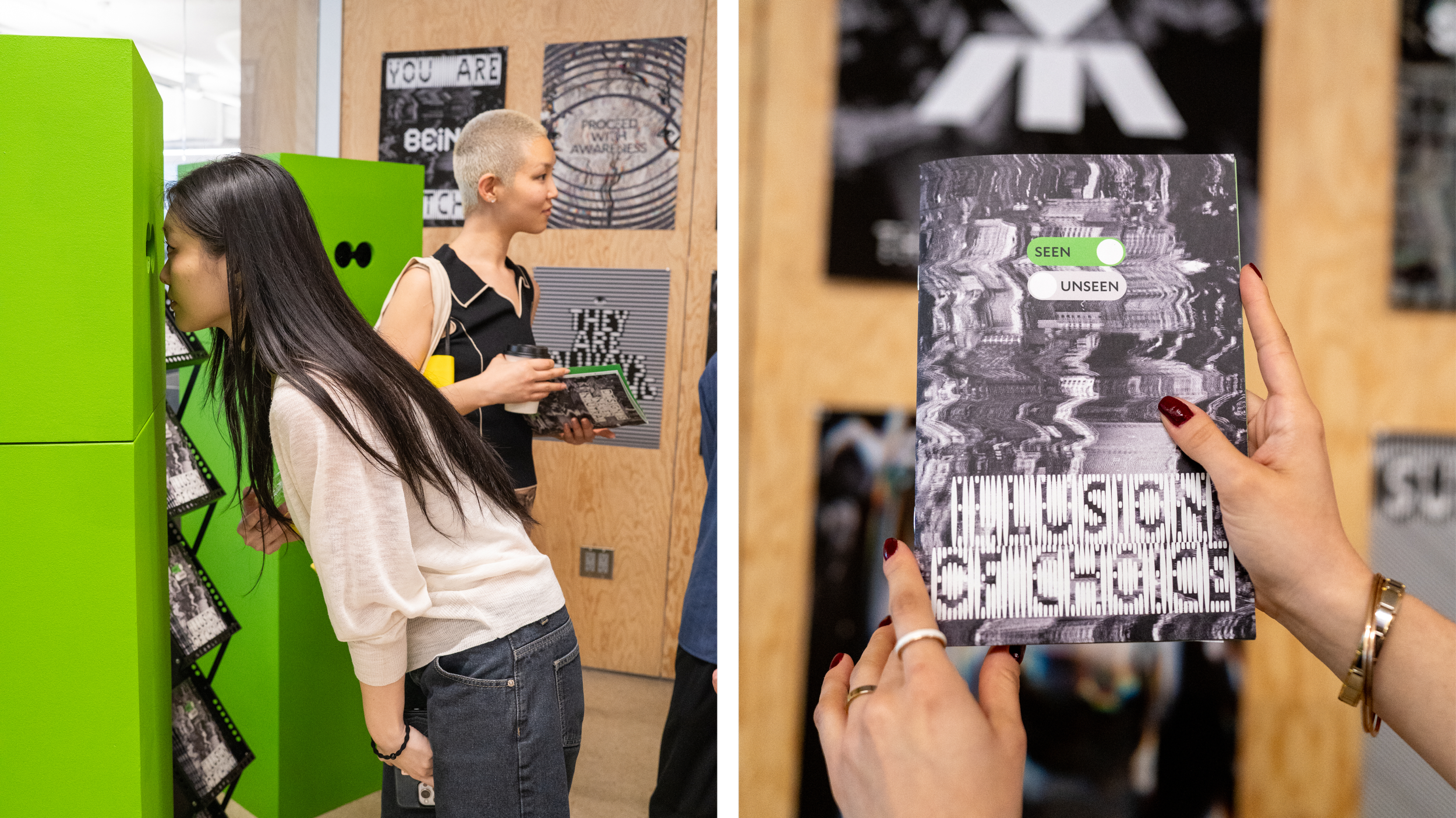
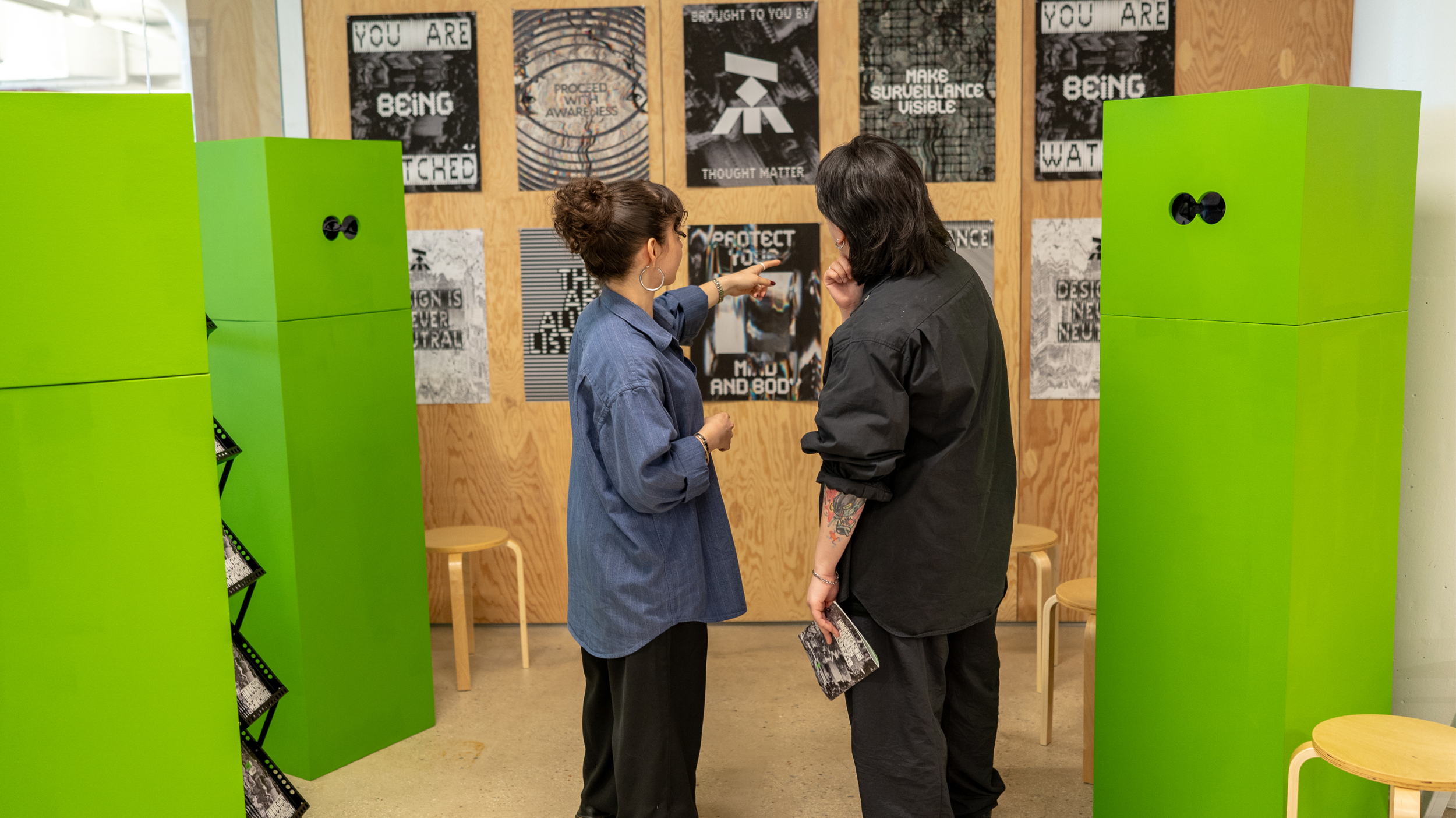
We eventually took that work out of the studio and into a different context. Seen / Unseen was presented at Pratt Institute’s Research Yard Open House, an environment where design, technology, and public life are intentionally brought into conversation. In that setting, the work shifted. It moved from an internal exploration to a shared one, opening itself up to students, researchers, and a wider public, and making clear that these questions are not only professional concerns, but educational ones as well.
The exhibition itself was developed through ThoughtMatter’s Ascender program, with Ascenders Sara Yuan and Nicole Beira, under the guidance of Creative Director Able Parris, building an installation that placed visitors inside the systems being examined. Rather than presenting conclusions, the work invited people to experience the tension directly and to respond to it. Throughout the day, the installation became less of a presentation and more of a conversation, as visitors shared their own stories, concerns, and observations about the systems shaping their lives.
What emerged was not just engagement, but recognition. People understood immediately what the work was pointing to, because they were already living inside it. The project also suggested a different way of sharing research, one that does not position knowledge as fixed or authoritative, but as something that can be surfaced, questioned, and reshaped collectively. In a setting like the Research Yard, where disciplines intersect and overlap, that approach felt especially resonant.