Our Thinking

CREATING CONNECTION ACROSS DIFFERENCE
Looking for images of resistance and resilience? Open any digital screen of your choosing these days and you’re likely to find a full spectrum of opinions being fiercely shared. Whether interacting online or in person, we are met with the sights and sounds of opposition so incessantly they begin to blur into white noise. This is a time of passion and polarization, with global events and tragedies to national ideological trends raising alarm daily as each side tries to make their points as loudly as possible. Tuning out the conflict is appealing yet unrealistic and turning away is a futile pursuit.
Meanwhile, diversity is on an upwards trajectory. In America, the rising force of Gen Z will be majority non-white by 2026, the most racially and ethnically represented generation yet. According to the US Censure Bureau, more than 42% percent of the American population is now represented by groups other than non-Hispanic whites, a 12% increase over just the past two decades.
Surrounded by differences of thought and image, hurtling forward at the speed of technology, we are witnessing an inevitable evolution towards digital and physical interconnectivity. Yet at the same time we are coming up for air to face the most critical issues of survival the world has ever seen. The challenge is timeless, making our need to embrace the opportunity for collective impact more critical than ever.
Ultimately, the impact of this cultural transformation won’t be as much about the numbers as it will be about the broader extent of our experience — our stories and ability to share and engage them. Whether it’s within the workplace or through creative collaboration, we are seeing the first ripples of this shift in greater efforts to consider inclusivity and representation. Thought leaders and change makers in every industry are coming forward to emphasize the important of bringing new perspectives into play. Meanwhile, intersectional brands and organizations, especially across creativity and social impact, are building new foundations based on the convergence of diverse points of view. While not without challenge, the resonance of these projects is drawing visible traction. Hike Clerb, an LA-based organization, was formed as a radical solution to the lack of POC representation in the outdoors and as a way for people to heal together in nature. Similarly, queer and South Asian female-founded cookware brand Our Place was built around the “transformative power in uplifting the differences in how people cook and eat together.”
As the next wave approaching adulthood, Gen Z is proving it is up for the challenge of bringing together the seemingly disparate. From social media to city streets, Gen Zers are pushing the limits of current frameworks with unapologetic authenticity. Unrelenting in their pursuit of the truth, there is little they are not willing to upend to create space for their identities and ideas.
Within and beyond this demographic is the growing presence of first-generation Americans. Most commonly defined as the children born to at least one parent who came to the United States from abroad, these are citizens of change with deep ties to both the immigrant experience and American legacy. First-generation Americans often live under the radar, a demographic most often without visible or cultural identifiers to fully reveal their unique positioning. Instead, they are united through a connection to two places (or more) at a time, and a recognition of this liminality in each other.
Having grown up in a world that came without a cultural handbook, first-generation Americans are experts at navigating the nuances of social behavior. Forming their understanding between the cultures of their residence and origins, these individuals have an inherent capacity for empathy. From a young age they learn to consider the context and viewpoints of others, and though they recognize the value of tradition and sacrifice, they are driven to surpass their parents’ achievements by redefining success in their own words. Resoundingly, they move through life with a worldly conscience, extending the benefit of doubt, a contextual imagination, and a bridge of understanding even when the experience of others does not ascribe to their own. When you know the feeling of standing alone, you offer belonging wherever you go.
America continues to see more immigrants arrive each year than any other country in the world. Accordingly, first-generation Americans are growing in both social presence and numbers. The Migrant Policy Institute recorded more than 18 million people under age 18 living with at least one immigrant parent as of 2021, an increase of 120% since 1990. The diversity of their experience is finding representation from standup comedy and film to brand identity and politics.
At a time of significant divisiveness in America, there is deep value in looking to the knowledge these perspectives hold. Empathy and understanding are the litmus tests of civilizations old and new, and looking outwards with an open mind empowers us to see ourselves with greater clarity.
First-generation American identity is not monolithic. In the flavors of a simple heritage recipe or the steadfast values of a family standing strong beyond familiarity lies an incredible capacity for bridging barriers, a desire to seek belonging in new forms, and a deep resilience for finding a way forward.
As we inevitably find ourselves working and coexisting increasing proximity to people who live and think differently than us, we can look to those who forge awareness into empathetic connection daily to find the frameworks of our future. While our differences may define us, creating new meaning by connecting to understand is essential to our individual and collective success as cohabitants of many moving worlds.

MOST PEOPLE HAVE NOT HAD A BOSS WHO LOOKS LIKE ME

I look like the woman at the laundromat. I look like the waitstaff at your corporate function. You might look at your home or office cleaning staff and see my reflection. I look like the front cover of the New York Times. A mother squeezed into a photo of migrants crossing the border.
When I started at ThoughtMatter full-time in 2018 after years of being a contractor, I looked like a young woman from what former president Donald Trump called a “shithole country”. While I was learning how to use my keycard and finding the best lunch spots in my new work neighborhood, my birth country was thrust into the cultural conversation. The reality of being born in El Salvador, a small, historically poor, Central American country, is that I look like many things — an executive or leader typically not being one of them.

JESSIE MCGUIRE, THOUGHT MATTER MANAGING PARTNER
As the newly-named Managing Partner of an award-winning, New York City design studio, why would I lead with what I look like? I’ve achieved this accomplishment through hard work, resilience, talent, education and dedication, yet I’m stuck with the label of being “exceptional” based on how I look. It’s more comfortable that way. More comfortable for everyone but me.
Being “exceptional” minimizes the roadblocks, racist comments and unconscious bias that the circumstances of my birth and the way I look have forced me to tackle. Being “exceptional” means people asking why it matters that I am a five-foot (on a good day), Salvadoran-American with a husky, opinionated voice? The answer, storytelling.
Many years ago, I saw a video of a prominent graphic designer taking the piss out of storytelling. I watched as a designer said that now everyone thinks they are a storyteller, even roller coaster designers. He was having fun at the expense of the design industry. His message: “Don’t take yourself so seriously.”
I bought into it. I vowed to never call myself a storyteller again. I was wrong.
Stories matter. The people telling these stories matter even more. Stories celebrate, inspire and clarify. Stories are affirming to those outside the dominant narrative and help turn condemnation for otherness into celebration.
Over the years at ThoughtMatter, stories like mine have helped inform our brand-building work with THINX, orgs like NKG Pace and communities in Downtown Staten Island. They are reflected in everything from our redesign of the Constitution for a new generation to protest posters we created for the Women’s March. I have also carved out a leadership role for myself amid our Founder’s assurances, “Jessie this is your studio. You are running it every day, do it your way.” To make those words official, I put together a proposal to be a partner. I searched every inch of the internet. The young, brown, adopted girl inside me, conditioned to question what’s real and what’s temporary, wondered if it was possible. Could I really be a partner? Imposter syndrome reared its ugly head. Why did I want to be a partner in a business I was already running?
I was raised in white spaces, but I am not white. In fact, I wrote an entire essay about it to get into grad school. It was fun and flirty, involved colorful brand references and got me into the MPS of Branding program at SVA. That was over a decade ago. Since that cute little essay, I have seen this country fracture along race lines, I’ve seen folks finally opening their eyes to what has been here since our founding. A bias, unconscious or conscious, against anyone who is not white. I realize it is important to name what is many times uncomfortable to discuss.
I have never had a boss who looks like me.
I’ve had a number of female mentors and leaders, but I have never had a mentor, boss or CEO who was not white or white-presenting. This matters because we become the stories we tell ourselves, as well as the stories we are told. Stories like mine can help empower a startup, organization or global corporation by ensuring such experiences are embodied in its brand.
As Managing Partner of ThoughtMatter, I am committed to telling a new story. An ever-evolving story where having a boss that looks like me is exceptionally unexceptional. I will do this with a narrative centered around the values below.
Be uncomfortable, do better.
Talented creatives need someone who is responsible for day-to-day decisions, and at ThoughtMatter that person is now me. I’m finding and defining my leadership style and voice, but I’m not the only one who has work to do. That means an end to interviews where prospects stand up when someone else enters the room but stay seated for me. No more new hires asking when they can have face time with the boss during our one-on-ones. No more vendors and clients assuming someone else has the final word. Together, we’re working to change these perceptions. We’re getting uncomfortable to get better.
Center impact and accountability.
When I attend an industry conference at a banquet hall, I go to great lengths to avoid wearing all black and having to tell people, “Sorry, I don’t work here.” Which has happened more times than I can count. What this exchange makes clear is that I’m not supposed to be at the table, in the room or at the event unless I am serving them. The truth is I am where I am today because I have always prioritized other people’s comfort at my own expense. I now have the platform, power and influence to be honest about impact and discuss accountability. This is ongoing work at ThoughtMatter and as partner, I am using my power and influence to keep us moving forward.
Making a difference is measurable.
Years of disappointments in championing diversity has taught me that making a difference is measurable. Good intentions are not. If someone says they want to hire a diverse team or support diverse voices, but everyone on their team or in power looks the same, then what they are saying is just words. I will continue to work every day at ThoughtMatter to make measurable progress. We believe in the power of design to make a positive difference in people’s lives and use our impact to hold ourselves to it.
I love being part of the design industry, graphic design specifically. My bookshelves are adorned with what feels like every Steven Heller book out there. I have Milton Glaser posters, stickers, buttons and I should admit I have posters and ephemera by most of the AIGA medalists over the last 20 years. I fangirl over the Design Matters and Clever podcasts. I go into the Rizzoli bookstore monthly to flip through Swiss and European design books. I know the late 90s and early aughts have shaped my aesthetic, like my love for platform shoes, and a piece of me will always be in awe of design’s power, influence and ability to shape the world around us.
But for all my love and adoration, the graphic design industry has not given many reflections of my lived experience in return. I now realize, like the clip clap of my chunky, decades-old platform sandals, it’s time to move forward and look for stronger support for my story (and my ankles).
With my new title of Managing Partner, I plan to honor design’s past, while adamantly and relentlessly pushing for progress.
The next time you see me at an industry event or come in for a visit, remember that I don’t look like what society has told us a boss looks like, but I am an equal partner. I am on a mission to show the industry and beyond that the top of the org chart should and can look like the world we live in. Full of people in all shapes, sizes, ages, colors, abilities, economic statuses and lived experiences, no matter how short, brown and loud.

POWER PLAY: GAMING’S ROLE IN SUBVERTING EDUCATION

Standing before the Lincoln Memorial in Washington, D.C. on August 28, 1963, Dr. Martin Luther King Jr. delivered his legendary “I Have Dream” speech to 250,000 people gathered on the National Mall. Now, almost sixty years later, 350 million people worldwide can experience a recreation of that moment thanks to Fortnite, one of the world’s most popular video games.
Fortnite, through a partnership with Time Magazine, is giving its players the opportunity to virtually watch the speech together, explore parts of 1963 Washington D.C., visit digital museums, and participate in activism mini-games inspired by the Civil Rights movement.
It’s early days yet, but so far the game, dubbed “March Through Time”, has been nothing if not controversial. Many, for instance, complained about players being able to use Fortnite’s “emote” function, which lets their avatars gesture and do dance moves. In short, hardly appropriate for such serious subject matter. Credit Fortnite, then, for quickly addressing that by disabling many of these questionable functions in the game mode. Still, there’s no easy fix for the concern that children will now associate Dr. King more with the game than activism. Nor is there a way for Fortnite to fully replicate the context, experience and impact of the original “I Have a Dream” speech. Fair comment. Nevertheless, argue the game’s advocates, after all we’ve been through in 2021 and all the technology now available, does it really need to?
Time was we’d generally turn to museums, libraries, schools and other institutions of learning to fill in the civic education blanks. But the plain fact is, depending on where you live and who’s doing the teaching, we’re not all on equal footing. Moreover, in the U.S., states have significant say over what children learn, and it is common for history to be revised and facts left out to serve individuals’ or communities’ ideas of morals and ethics. For the most part, that sort of curriculum has never painted a complete picture of history, often favoring exciting or romanticized narratives while hiding painful, ugly truths.
Enter gaming. Because gaming exists outside the bubble of cultural institutions and educational platforms, it is immune to many of their faults. In an opinion piece for Bloomberg.com on the distinctions between gaming and the greater world of culture, George Mason University economics professor Tyler Cowen writes that due to the insular nature of gaming: “It is easy to become a world-class performer in a game without knowing much about the broader culture. By the same token, most of today’s cultural experts know very little about gaming, and they get on just fine.”
That autonomy, free from personal or geographic biases, positions gaming as an option and resource for users who lack or don’t have access to the wider knowledge traditional learning institutions offer. For those school-age gamers, this sense of escape offers them new paths to explore and, even more, the prospect of new online communities with whom to do it. Such prospects give gaming platforms an effectiveness, scale and reach that mainstream educators can only dream about. As Cowen puts it, “gaming is more like participating in an event than watching an event.”
Fortnite’s MLK experience has so much value precisely because it works as an educational first step and conversation starter for many who otherwise may never have been exposed to or creatively engaged with the civil rights movement and its importance in our nation’s history. While users aren’t participating in the actual event that inspired the platform, they are sharing and participating in an interactive experience hard to replicate in the real world. For all the social media brickbats that have been hurled at “March Through Time”, many parents have chimed in that their children, after playing the game, wanted to talk to them and learn more about Dr. King.
Mission accomplished
Gaming’s foray into positive social impact isn’t necessarily new. In the summer of 2020 Fortnite itself hosted a roundtable discussion on race. Minecraft, another popular game, hosts “The Uncensored Library” — a safekeep built by Reporters without Borders that houses news and articles banned in countries without freedom of the press. Another important point Professor Cowen raises is the capacity of games to fight back against government regulation. In games, rules are set and enforced by creators and players, essentially allowing for innovation and new ways of thinking that government oversight might prevent. That’s a valuable resource to have, indeed, when tackling how to shake up a system as large and essential as education.
For years, gaming has been put down as a negative contributor to a plethora of social and health issues. But it turns out many of those who complain the loudest about it really understand it the least. While gaming may exist on the fringes of culture, it commands massive audiences equal to or greater than traditional media’s top performers. What Fortnite and others in effect are doing is exploring the capacity of gaming’s greatest asset, its power.
Malcolm X, the Civil Rights leader and contemporary of Dr. King, once said: “Power never takes a back step — only in the face of more power.” In the spirit of that sentiment, then, rather than critique Fortnite for exploring new territory with “March Through Time”, let’s instead applaud its creators for seeking how to use gaming’s power as a tool for progress — leveraging its reach to challenge, knock down and hopefully evolve traditional educational systems that all too often use their power to hold us back.

CONTRARIAN VIEWPOINTS NO LONGER CUT IT
As a studio that prides itself on embodying a contrarian spirit unafraid to question it all, we constantly challenge and explore the many angles of our approach to design, strategy, the clients we choose to work with, and staffing. Our non-traditional team is made up of folks of all ages and backgrounds — from both inside and outside the industry — who have taken unique paths to join us and bring unique points of view to the table.
But lately, as so much continues to rapidly move in seemingly wrong directions, it’s become clear that our contrarian viewpoint no longer cuts it. While it was a fresh new take when our studio was founded, these days that’s no longer the case. Contrarianism is now the consensus. It’s gone mainstream. So it doesn’t matter that we were early adopters. Nor does it set us or our thinking apart anymore. Time, then, to shift to subversion in order to keep evolving and stay ahead of the pack.
While being contrarian means rejecting what is popular and going against the norm, subversion takes things a step further. It shines the spotlight on established or existing systems, and utilizes tools, skills and resources to overthrow, undermine, weaken or destroy them.
The last few years have opened our eyes to the fact that many of the pressing issues and injustices we face are consequences of flawed systems. Social shortcomings like racism and other inequities are byproducts of their design. Most people would see this as a failure. We, however, look at it a bit differently.
As strategists and designers, there are many systems we have the power and obligation to undermine in our daily work. In a recent piece, our design director Wednesday Krus discussed the vital role that UI/UX designers have in making the internet less dark by weakening common practices that let brands deceive consumers for profit and power. That is just one example of our studio’s actions centered around activism, awareness and engagement, the principles we constantly strive to build upon.
We are, of course, realists. Entities like social media and the healthcare, justice and food systems are simply operating the way they were designed to. Twitter was designed to be a place of connection and free conversation, regardless of who was connecting and over what subject matter. Health insurance, meanwhile, was designed to give people access to care; that is, if they have the means to pay for it. And so on.
Looking back, it’s clear these systems were bound to fail before they even launched. They were created, intentionally or not, to suppress and weaken the many for the benefit of the few. They were made to be strong and last long without considering that the world would always be changing around them.
The rub is, it takes design to destroy design. That’s where subversion comes into play. Creators have long tapped into subversive practices to play their part in upending unjust systems. For the Brighton Museum’s 2013 exhibition titled Subversive Design, the institution explored “how designers, makers and manufacturers react to the world around them, playing with form, function and materials to create objects that provoke and amuse.” It explained that “for over 200 years craft and design have been used to engage and challenge political and social issues in both obvious and more hidden ways.”
While one person can make a difference, real subversion takes a collective effort. In the New York Public Library’s description of its exhibit Subversion & The Art of Slavery Abolition, the organization wrote that it took a collective of abolitionist writers, poets, illustrators, photographers and more to generate the knowledge, awareness and emotion necessary for “the formation of one of the movement’s most subversive projects: The Underground Railroad.”
To inspire and establish subversive initiatives, what’s needed is a community of creative, forward-thinking people. Writers, to encourage and bring clarity. Visual artists, to paint realities and make people aware. Poets and musicians, to create combinations of words and rhythms that make sure people never forget. The list goes on and on; the possibilities endless.
The poet Philip Larkin once said, “I think we got much better poetry when it was all regarded as sinful or subversive, and you had to hide it under the cushion when somebody came in.” Consensus flattens an idea. Subversion sets it free. When you don’t look for a mold to fill or rules to follow, opportunities abound. True, it might take more work to get noticed, but working outside an established system is where the magic happens. That’s where we as a studio thrive; where real change is possible.
So now we ask: Who is ready to move forward? Who has the guts to shift, not just to join us in taking a stand but in tearing systems down?

I WANT TO BREAK FREE
Why It’s Time to Leave UX Laws Behind
The scientists working away in the 1960s had no idea their proto internet would live on long after the Cold War which gave birth to it. In those early days of the Web, the goal was to create an alternate way for government leaders to communicate with each other. But by the 1980s, once computer scientist Vinton Cerf had nailed down how to connect computers all over the world, when it came to innovation the sky was the limit.
Browsers and search engines were invented. Steve Jobs and Bill Gates built their empires. And Millennials came of technological age. For they’ve been the ones who’ve turned the Internet’s limitless landscape into a tool for gathering information, building community, entertainment and, most importantly, commerce. Trouble is, as user experience patterns were refined, passed from brand to brand, from person to person, the Internet’s become too designy and overly scientific. These days, templates and modular tools rule; curiosity and creativity have fallen by the wayside. Wix, Squarespace, Shopify and the like dominate the landscape with their modular, atomic design and UX principles. Designs are built block by block, page by page — hero, call to action, product feature, emotional hook and the like. It’s same old same old, over and over. Snore.
The one-size-fits-all model is a great starting point for a new entrepreneur with limited design or development resources. But for designers, these platforms opened the door for a generation reliant on automation. The formula isn’t flawed — but the dependency on it is.
The more’s the pity, too, because by nature the Internet can be a weird, wonderful place. That is, if we let it be. And that’s what Gen-Zers see, breaking free from the reigns of UX on platforms like TikTok. If only we could close the book on UX Laws and get back to the spirit of exploration and experimentation that shaped the Web early on, then the possibilities would be endless.
The plain fact is, nothing changes if nothing ever changes. Innovation? If trailblazers only walked down well-worn paths, forget it. When it comes to the digital landscape, nobody’s going to learn a new digital experience if all you keep giving them is one that prioritizes usability over creative thinking. Of course, websites and applications must be easy and intuitive to navigate. Data, logic and psychology are key to shaping the user journey. Whether it’s choosing a new pair of glasses or sending someone flowers, users arrive at a site with a goal in mind, and the easier it is for them to complete that goal, the more usable the site is considered.
In order to achieve that, though, designers stay laser focused on meeting the strict criteria dictated by UX Laws. Take, for instance, Brad Frost and his Atomic Design System. No question it’s a great resource for design systems thinking. Still, is his restrictive UX approach right for everyone? Can it, in fact, be used as a launching pad for new directions? Testing, iterating, and inclusive design processes may be essential, but if we want to really benefit users we must think of them as people, not lab mice. Our lives are more than set a goal — meet a goal — get reward — repeat.
Moreover, while we’re being led into that sea of repetitious sameness, who’s benefitting? Certainly not users, who are being psychologically tricked into completing a brand’s goal. Consider that the innovative UX Laws adhered to by millennials are precisely what paved the way for Dark Patterns — essentially UX and UI tricks that designers and brands intentionally play to convince users to complete an action they wouldn’t have otherwise completed. We’re talking about forced subscriptions, intentionally misguiding language, “free” trials, and hidden costs that require extra effort for the user to avoid.
But then there are the brands that think outside of the templated box. They look to creativity as how to build provocative experiences that inspire us to engage in a shared goal. At ThoughtMatter, we believe brands create lasting connections with their audience when the relationship is built on trust and honesty. People enter relationships with brands that feel authentic, not brands looking to trick them at every turn.
If I went to a store and bought a bottle of sunscreen, only to find out that I then would be charged for a new bottle of sunscreen every month, I’d be pretty unhappy. And I’d be even unhappier if I had to jump through all sorts of hoops to stop being charged. Behind those annoying charges? Dark patterns. Because they’ve proven so powerful at driving short-term revenue, it’s why many templates and stores utilize them. Here’s the rub, though. Anytime consumers have to work harder to cancel that recurring charge than to purchase something, sooner or later the sheer aggravation of it all could wind up turning them off.
Here’s where UI/UX designers can play a vital role so things don’t even get that far. I believe it’s their responsibility to make the Internet less dark. Take the power away from the brands and give it back to the consumers in ways that delight them and are trap-free. Step away from the sticky notes. Ditch the laws of UX. Instead, start from scratch. Create symbiotic experiences that are mutually beneficial to brands and the people who support them; experiences that are compelling and desirable for extended visits. Take a page from TikTok and break free from the UX ideologies that millennials have clung to so hard.
TikTok is the digital equivalent of wandering through an overgrown forest. There, algorithms lead users through the content. Compare that to the millennial-built digital world of meticulously placed navigation tools we have now — a well-paved path through a manicured garden, complete with signage, a map at every corner, and a brightly lit gift shop. I’m not asking designers to use algorithms as their guiding force, but perhaps there’s a way to apply this sort of thinking to branded experiences. When it comes to new designs, build upon the idea of user freedom that TikTok has been so successful with.
ThoughtMatter has embraced a sense of wonder and a freedom of exploration on projects like the GirlForward annual report, For the People, and the Photography 2020 Compendium. As a studio we are questioning it all and leaving the confines of UX Laws behind. We’re making room to feel comfortable in uncertainty; rewarding exploration when it comes to aligning our digital and brand thinking.
The Internet wouldn’t exist if those scientists in the Sixties had stayed within their comfort zone. So as we approach the halfway mark of 2021, how are you going to be part of web design’s next chapter? Are you going to stick to the same old modules and templates, or are you going to break free and leave the laws of UX behind?
COPE VS. CREATE

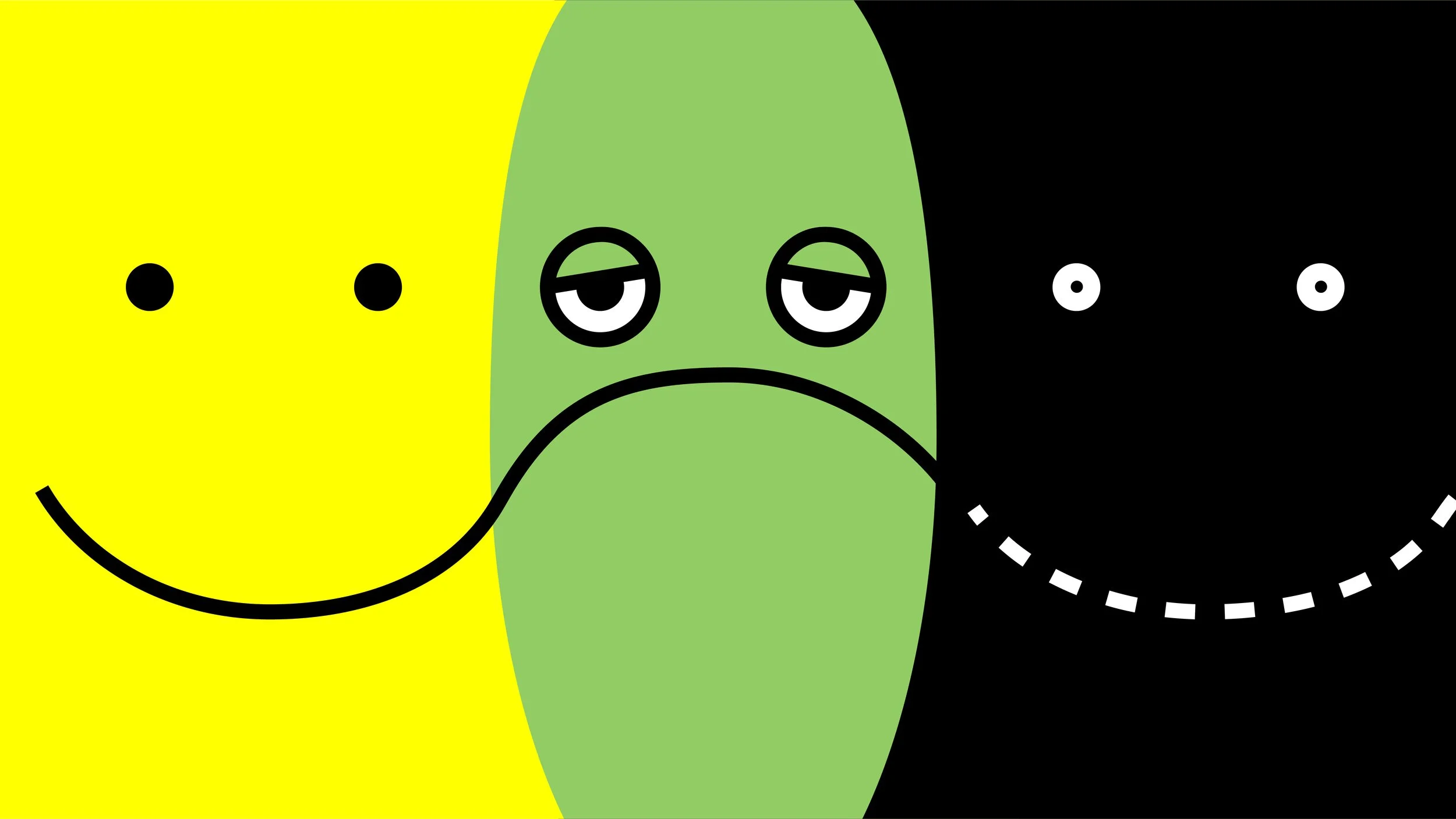
As more of us feel the blues while being cooped up, the idea isn’t just to cope but to create.
Change of season got you down? You’ve got plenty of company. While SAD (seasonal affective disorder) is known to affect only 5% of US adults every year, the symptoms — pervasive sadness, undue fatigue, difficulty concentrating, lost interest in normally enjoyed activities — may well be plaguing many millions more as a result of life under quarantine. And if doomscrolling panic, Zoom fatigue, SAD szn, remote work burnout and pent-up post-election hysteria aren’t already enough, with a second wave of coronavirus starting to hit and more stay-at-home orders sweeping the nation seasonal depression could soon get a whole lot worse.
What to do? Now that usual remedies like more in-person interaction and big social gatherings aren’t readily available, we need to find more creative ways to cope. Metapod, for one, to the rescue. It’s that big, green, Pokémon-inspired suit which doubles as a cocoon for humans and sold out less than seven hours after launching this month.
Unzip the Metapod, climb inside, and watch Sarah Cooper’s new Netflix comedy special Everything Is Fine, which feels like a tribute to the “this is fine” dog meme that first went viral in 2016 as our collective denial of a rapidly deteriorating situation. Everything, in fact, was certainly not fine back then, and still isn’t. An NPR review called the show “the first piece of pandemic entertainment to successfully convey the feelings of instability and emotional unsteadiness that have been part of so many of our lives since the spring.”

The “how it started vs. how it’s going” meme that people usually share to show glow-ups and big career moves has been overtaken by a more satirical view of the state of the world in 2020. How it started: blissful ignorance. How it’s going: dumpster fires everywhere.
how it started how its going pic.twitter.com/N2bxTLyKOx
— Mayor Guy Fieri (@GuyFieri) October 12, 2020
When lockdown is officially Collins Dictionary’s word of the year and we can buy life-sized cocoons online, there’s no denying our months-long quarantine has forced us to turn inwards. The Pandemic Logs series from the New York Times features seemingly mundane but telling details from readers’ diary entries about living in self-isolation. “My ‘remembering Dad’ sunflower bloomed today,” wrote Ann Bovee of Redmond, WA. “I went on a three-mile walk alone with my podcasts and wished I had a walking buddy,” wrote Pam R. of Sarasota, FL.
And while fast food brands on Twitter may be the cheeriest corner on the Internet, even McDonald’s, purveyor of Happy Meals, is questioning our mental well-being.
it’s always “when is the McRib coming back” and never “how are you doing person who runs the McDonald’s account”
— McDonald's (@McDonalds) October 23, 2020
This new kind of vulnerability in brand communications is refreshing. We want to get in touch with our anger, sadness and regret — emotions we experience but rarely discuss in public. America’s Secret Playlists, a research study that analyzed thousands of private Spotify playlists, called it a shift towards “emotional realism,” where 44% of Americans confess they have listened to music to purposely feel dark emotions.
So how do we find emotional release? Snack giant Mondelez International wants to help by “humaning”. That’s what the company calls its new global marketing strategy. The goal: Move away from pure data-driven tactics towards making more “human” connections with consumers. Not surprisingly, humaning has already racked up Pepsi levels of ridicule in the ad world for tone-deafness.
Who’s kidding whom? When it comes to releasing and providing relief from strong or repressed feelings, corporate America’s emotional range has so far been limited at best. Artists, on the other hand, know a thing or two about catharsis. “Make art. Talk to your family. Read. Watch a movie. Move a muscle — it changes a lot,” says Marilyn Minter in Hirshhorn Museum’s video diaries that take us inside artists’ studios as part of a living record of the worldwide pandemic.
People need the cathartic power of creativity now more than ever. As more of us feel the blues while being cooped up, the idea isn’t just to cope but to create. It’s why bedroom pop, with its homespun quality and lo-fi sounds, is one of the most popular genres today. Since 2018 it’s grown from an obscure Spotify playlist to one with more than 600,000 subscribers. Artists skew young and female, produce dreamy, contemplative music from their bedrooms and write about deeply personal issues. Your sad-music starter pack must include: mxmtoon, Clairo, FKA Twigs, Beabadoobee, Faye Webster.
In the gaming world, Animal Crossing’s popularity is similarly revealing. Says Bitch Media’s social media editor Marina Watanabe, everything about the social simulation game “from the cute aesthetic to the wholesome music to the mundane tasks and lack of combat or high stakes feels like it’s designed to keep me calm.”
Whether through DIY indie music or soothing virtual islands, more people are channeling their innermost thoughts and feelings in isolation by activating the imagination. The challenge for businesses, then, is to incubate creativity and fuel catharsis by providing an outlet for what can’t be shown or said. It makes us feel less alone.
When it comes to mental health, today’s marketing has been serving up the Four Seasons version when we clearly need more Total Landscaping — work and words that cut deeper, hit us right in the feels and snap us out of the numbness. As quarantine thickens my own cocoon of isolation and targeted ads about therapy from BetterHelp start to flood my social media feeds, the healing power of making is just what the doctor ordered.